Stories
Filters
Filters
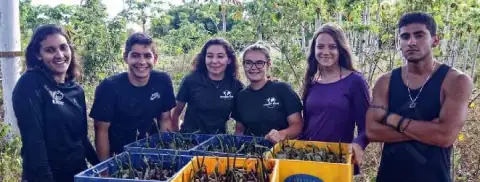
Adopting Curaçao’s mangroves
Terence Ching has worked in Curaçao’s nature parks since he was fourteen. After an oil spill damaged an important mangrove area, he founded the COIA Foundation and its Mangrove Adoption Program: individuals, schools, companies and even nursing homes raise mangrove seedlings until they are strong enough to be planted in the wild. The program restores coastal habitats, creates green jobs and grows bottom-up, with the people who have cared for these places all their lives.
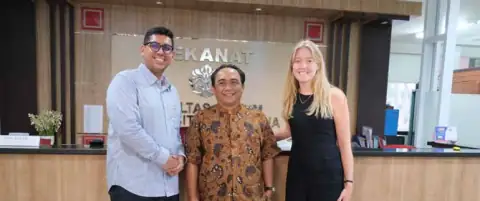
Climate action that includes people with disabilities
Daura van Vuuren is a Dutch researcher working where climate change and disability inclusion meet. People with disabilities are two to four times more likely to die or be injured in a climate emergency, yet most national climate plans don’t mention them. With a Bevica scholarship she travelled through the US, Canada, Indonesia, Australia, Fiji and New Zealand-Aotearoa to collect their stories and build the case for climate policy that leaves no one behind.
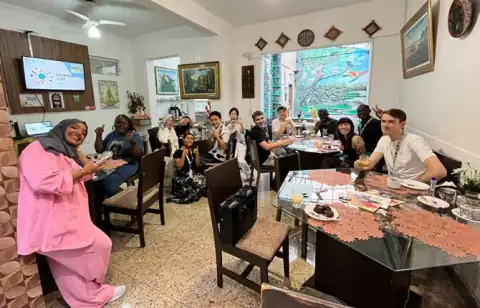
Youth dialogues across the Global South and North
Laura Higuera Sánchez and Shakeelah Williams co-chair the We Are Tomorrow Global Partnership (WAT-GP), a youth-led network of over 30 climate organisations. Its Global Dialogues Project brings youth groups from the Global South and North together for thirteen months of co-learning, policy work and youth dialogues; this year’s theme is nature-based solutions. Their conviction: small actions, taken together, lead to global transformation.
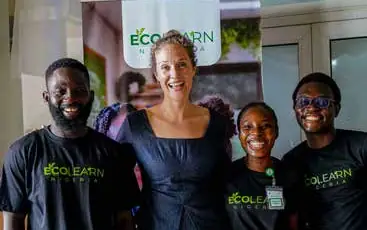
Climate education in Lagos schools
Kayode Ogunleye co-founded ECO Learn Nigeria, a youth-led organisation working towards universal access to climate education by 2030. It trains teachers across Lagos State to become climate education ambassadors, who then guide their students in school gardens, recycling and water conservation projects. Nature-based solutions are nothing new here, Kayode says: they have always existed within Nigerian communities.
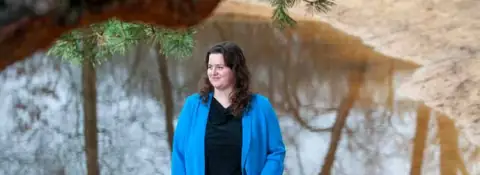
Fresh water from seawater, with algae
Meinke van Oenen founded Algaenius, which turns seawater into usable fresh water with halophilic algae. The algae absorb most of the salt while capturing CO₂ and removing pollutants, without the energy use and toxic brine of reverse osmosis. Water scarcity is coming, even to the Netherlands; her answer follows her own philosophy: look at nature, find the future.