Youth dialogues across the Global South and North
Laura Higuera Sánchez and Shakeelah Williams co-chair the We Are Tomorrow Global Partnership (WAT-GP), a youth-led network of over 30 climate organisations. Its Global Dialogues Project brings youth groups from the Global South and North together for thirteen months of co-learning, policy work and youth dialogues; this year’s theme is nature-based solutions. Their conviction: small actions, taken together, lead to global transformation.
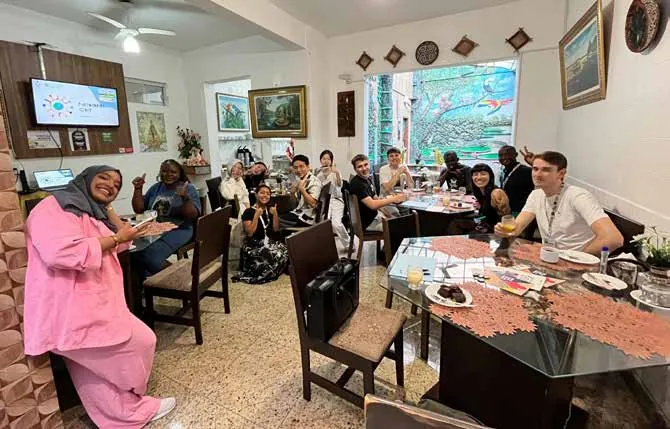
“Every action counts, no matter how small, and by acting collectively, young people can create meaningful change.”
With this conviction, Laura Higuera Sánchez (27) and Shakeelah Williams (21) lead the We Are Tomorrow Global Partnership (WAT-GP), a youth-driven climate organization founded in 2019 that connects and empowers young changemakers across the globe. For them, climate action isn’t reserved for experts or policymakers, it’s a collective movement built on everyday acts of awareness, advocacy, and ambition.
At the heart of WAT-GP lies a simple yet powerful belief: small actions can trigger global transformation. From local clean-up campaigns to international youth dialogues, the organization creates opportunities for young people to learn, collaborate, and take ownership of their role in shaping the planet’s future.
Two paths, one purpose
Both Laura and Shakeelah’s climate journeys began in high school years before they would meet but their paths share a common thread of purpose. Laura, now a qualified lawyer with a master’s degree in transnational governance, first encountered WAT-GP not as a leader, but as a collaborator. At the time, she was a member of a Mexican climate advocacy group partnered with the organization. Her commitment and insight led her to join WAT-GP as Policy Manager, a role through which she helped shape its structure, archives, and strategic direction.
Shakeelah’s journey, meanwhile, started within WAT-GP’s events department. While completing her bachelor’s degree in environmental science, she focused on fostering connection curating an inclusive and holistic environment for members worldwide. Her ability to see both the logistical and emotional needs of young activists helped strengthen the organization’s sense of community and purpose.
Now, as co-chairs, Laura and Shakeelah have spent the past year leading the organization through a phase of restructuring and renewal. Their shared vision centers on building sustainability not only in climate action but within the organization itself, ensuring that WAT-GP continues to empower youth to act autonomously, inclusively, and confidently.
For both leaders, the message is clear: you don’t need to be an expert to make a difference. Every decision, whether it’s organizing a local project, attending a global dialogue, or even rethinking daily habits contributes to a larger collective impact. As Laura puts it, “Almost every action, no matter how minor it seems, can have an impact on the climate.” And with young leaders like her and Shakeelah guiding the way, WAT-GP is proving that the smallest steps, when taken together, can truly lead to global transformation.
What drives them
When asked what motivates them to remain deeply involved in climate action, both point to experiences that have shaped their understanding of justice, inclusion, and voice.
For Shakeelah, she identifies that her youth qualification, along with being exposed to the ways in which the youth are both undermined, their efforts unrecognised and not acknowledged is a troubling perspective. Where in the day of today we are still heightening power dynamics between the Global North and Global South, at the cost of engaging with youth.
Laura’s motivator was born out of her exposure to the realities regarding how exclusionary the decision-making space is for youth alike. Although she does note that there have been advancements that have allowed hope to bloom, there is still a long way to go in the capacity in which we integrate youth into the process as opposed to them being a mere token of representation. Laura makes particular note of the ways in which these realities have curated her interests towards climate education and issues of mobility.
Different though their perspectives may be, both Laura and Shakeelah share a single goal: ensuring that young people are not just included in the process, but that they help define it.
The Global Dialogues Project
One of WAT-GP’s flagship initiatives, the Global Dialogues Project (GDP), embodies this principle of inclusion and co-creation. Co-led with Youth and Environment Europe (YEE), this 13-month program connects youth-led climate organizations from both the Global South and Global North, creating opportunities for collaboration, learning, and shared advocacy.
“Each year, we select a specific theme,” says Shakeelah. “This year, the focus is on Nature-Based Solutions, exploring how communities can protect ecosystems while adapting to the changing climate.”
Each edition brings together 8 to 12 youth organizations for co-learning and policy development. The program culminates in youth-led national dialogues and Youth Climate Agendas, with one representative from each group supported to attend the COP conference.
According to Laura the project began two years ago as an experiment. “It started as a pilot, almost a test drive,” she recalls. “When preparing for COP28, we began collaborating with YEE and WWF’s Voices for Climate Action program to promote knowledge exchange between Global North and Global South countries.”
The pilot paired Global South and Global North organizations in reciprocal exchanges. “One person from each organization visited the other’s country and joined their youth dialogues,” Laura explains. “That experience helped us refine the model for the following year.” Since then, the GDP has evolved into a hub for advanced collaboration, where youth organisations strengthen their advocacy through workshops and expert mentorship, continuing long after the program ends.
To meet the project’s growing scope, WAT-GP restructured its internal operations. “Engaging more Global North partners has allowed us to be more intentional in how we design workshops and communication spaces,” says Shakeelah. The first six months now focus on capacity-building in policy engagement, climate finance, and advocacy strategy.
A defining value, she emphasizes, is autonomy. “We provide the structure and resources, but every organization defines its own mission and message. Our role is to amplify their voice, not reshape it.” The project also provides connection in an often-isolating space. “It can feel lonely as a youth-led organisation,” Shakeelah admits. “But this network bridges that gap.”
Today, WAT-GP’s network links over 30 youth climate organizations worldwide. “Participants in Pakistan are collaborating with youth in Argentina and South Korea on a COP-focused event about climate anxiety,” says Shakeelah. “It shows that climate issues, and the drive to solve them, are truly universal.”
This year’s Global Dialogues Project also reflects that shared purpose through its theme: Nature-Based Solutions. When asked how WAT-GP integrates this focus into its work, Shakeelah explains that each year the program builds on a new area of climate action. “Each year, we aim to strengthen youth-led climate work globally,” she says. “This year, we’re helping eight organizations deepen their knowledge of nature-based solutions, offering technical support for youth dialogues, and guiding their advocacy strategies to implement what they learn.”
Challenges and change
Laura noted a concerning decline in global support for youth-led organizations. “Political and economic instability is making it harder for youth to access decision-making spaces,” she said. “We’ve seen a reduction in COP badges, fewer invitations, and shrinking budgets. A few years ago, participation felt more open, now it’s narrowing.”
She stressed that continued support is vital. “Today’s decisions shape tomorrow’s world. Without sustained investment in youth participation, we risk losing a generation of climate leaders.”
For Shakeelah, the greatest need is acknowledgement. “Recognition goes a long way,” she said. “Even small gestures from ministries, negotiators, or donors can have a huge impact. Youth organizations are doing meaningful, results-driven work. Visibility helps sustain that momentum.”
A global network
In just two years, WAT-GP’s network has grown to include over 30 youth climate organizations from across the world, from Nigeria and Nepal to Portugal and Chile. Each group contributes to a growing web of shared learning and solidarity.
While the network continues to expand, Laura acknowledged that the Asia and Pacific Island regions remain underrepresented. “It’s an area we’re working to strengthen,” she said. “We believe in ensuring that voices from every region are part of the conversation.”
What makes the project unique, both co-chairs agree, is its long-term impact. Many participants continue collaborating long after their program ends, often with the same experts who trained them. “That continuity is what makes the network so strong,” said Shakeelah. “It’s not just a one-year project; it’s the foundation for lasting global cooperation.”
Looking ahead
If given the opportunity to speak directly to climate negotiators or the Dutch delegation, Laura said she would first like to express the support that WAT-GP and the Global Dialogues Project have already received from the Dutch Ministry of Foreign Affairs. This has been helpful in positioning their organisation.
However, she also noted that continued, and expanded, investment is crucial. “A major challenge we’re seeing globally is a decline in overall support for youth-led organizations. Political and economic conditions in many parts of the world are increasingly difficult, which impacts budgets, funding opportunities, and access to decision-making spaces.”
For Shakeelah, the message is clear: “recognizing the efforts, dedication, and tangible achievements of youth organizations is incredibly important. Since the surge of youth-led organisations around 2019, there is a risk that their work becomes over-generalized or overlooked.”
Message to the next generation
The chairs conclude their experiences in noting that there is no such thing as a good place, or time to start advocacy work. Every single effort is valuable in the pursuit of a better Earth for future generations to inherit. Often the perspective and dynamism of youth go unrecognised, but it is crucial for youth to engage in active communication and action to participate in the discussion for the exchange of a world that is livable, healthy, and resilient. One does not need to be a technical genius to begin, but rather that it is encouraged to start where you are, get involved where you can, feed into your strengths and curiosities, and let it bloom from there.
When asked what message they would give to young people who want to take climate action but don’t know where to start, both co-chairs agreed: there’s no perfect moment to begin.
Laura said that waiting for the right opportunity can mean missing the chance to make an impact. “Start where you are,” she advised. “Join a local group, initiate a project, have conversations. Every small effort contributes to something bigger.”
Shakeelah echoed that sentiment. “You don’t need technical training or years of experience. What matters is the willingness to act, to learn, and to connect with others doing the same.”
Their belief, that small actions lead to global transformation, continues to guide their work and inspire those around them.
For Laura and Shakeelah, the story of the We Are Tomorrow Global Partnership is not just about an organization; it’s about a movement. One built by young people who refuse to wait for permission to make change, and who remind the world that transformation begins not in policy rooms or conference halls, but in the everyday choices and courageous acts of individuals.
Because every action counts. And together, those actions can change the world.
From the COP30 storybook of Jonge Klimaatbeweging (2025). Text: Stephanie Okafor, Lot Schuijer.
Comments