Climate education in Lagos schools
Kayode Ogunleye co-founded ECO Learn Nigeria, a youth-led organisation working towards universal access to climate education by 2030. It trains teachers across Lagos State to become climate education ambassadors, who then guide their students in school gardens, recycling and water conservation projects. Nature-based solutions are nothing new here, Kayode says: they have always existed within Nigerian communities.
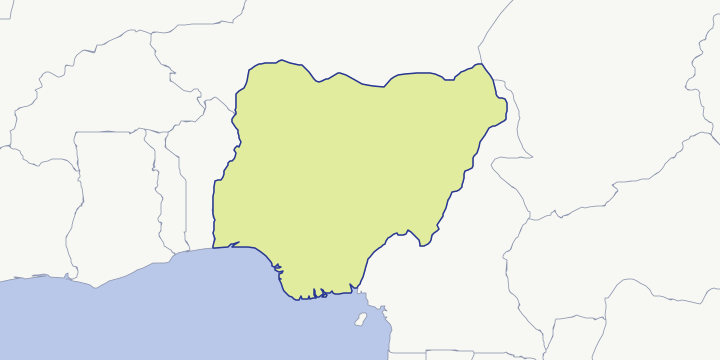
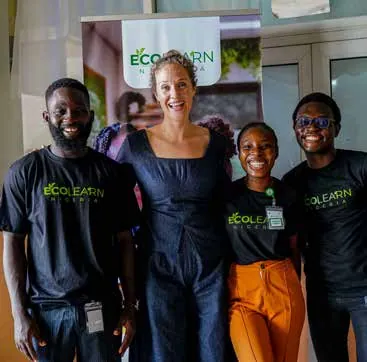
Kayode Ogunleye (30) is the co-founder and team lead of the ECO Learn Nigeria initiative. He studied in Lagos and is a lawyer, as well as the Director of Programs and Operations at the Youth Sustainable Development Network (YSDN).
For over a decade, Kayode has been active in the social impact space. He began his career in an employment-based role while studying, later shifting toward volunteerism and community impact.
Balancing school and work, he gradually found his way into the social and climate action space dedicating himself to creating lasting impact.
Urgency as a driver for change
Coming from Nigeria, Kayode knows well how difficult it can be to remain passionate in a society that is still developing and working to overcome many challenges. “But when you are clear about what you want to achieve, where you want to go, and how your work can make a difference, that awareness keeps you motivated and focused.”
How does he stay motivated in a field that can feel overwhelming? Kayode reminds himself that the long-term goals are far more valuable than the short-term ones. He explains that he is able to overcome the barriers and challenges that could discourage him because of the vision he has for his community and his country.
He emphasises the importance for young people to be involved in climate action given the urgency. “The time to act is now. We as youth are witnessing the adverse effects of climate change and other societal problems firsthand. If we don’t act quickly and collectively, our world may no longer be liveable in the next 10 to 15 years. Climate change is already affecting our lives today, imagine how severe it could become if we remain passive.”
He recalls October’s heavy rainfall in Lagos, when flooding disrupted entire neighbourhoods, a vivid reminder of what’s at stake.
“We can’t place the responsibility on older generations alone. We, the youth, must take responsibility, take action, and be involved. If we don’t do it, no one else will do it for us.” He describes how for this reason it is crucial to align goals and work together in order to create a future ‘where society and our planet remain liveable for everyone’.
About ECO Learn Nigeria
As the team lead for ECO Learn Nigeria, Kayode’s focus lies in this youth-led organisation. This organisation focuses on ensuring universal access to climate education by 2030 through curriculum integration, advocacy and sustainable community projects.
It began with capacity-building sessions for teachers across Lagos State. There, teachers were trained to become climate education ambassadors. During these sessions, they undergo rigorous training assessment, learning how to integrate sustainability and climate concepts into their classroom lessons. After the training, these educators bring what they’ve learned directly into their schools, guiding students in projects like school gardens, recycling initiatives, and water conservation campaigns.
To measure the students’ understanding and engagement, they organize competitions and evaluation sessions. These activities encourage students to think critically, act sustainably, and take ownership of their environment. Over the past two years, the results have been remarkable. “We’ve seen teachers become champions of climate education and students taking leadership in sustainability projects within their schools and communities. These success stories inspire us to continue expanding our work, reaching more schools, more teachers, and ultimately, more young people across Nigeria.” Kayode explains.
Integrating nature-based solutions
The organisation also focuses strongly on nature-based solutions. “Nature-based solutions are not new to us, they’ve always existed within our communities here in Nigeria. Long before the term became popular, people were already engaging in activities like tree planting, upcycling, and using local natural resources to solve everyday challenges. At ECO Learn, we integrate these concepts into our training sessions with teachers and students.” The organisation helps them recognise that the solutions we need are often right around us within our own environment. “By connecting the idea of nature-based solutions to what people already know and practice, it becomes much easier for them to relate to and apply these concepts in real life.”
For instance, when teachers and students plant trees, start small gardens, or reuse materials within their schools, they are actively implementing nature-based solutions without even realizing it. These small, local actions address both environmental and socio-economic challenges, improving food security, creating cleaner spaces, and strengthening community resilience.
In order to engage policymakers in Lagos, they develop position papers and procure policy dialogues to encourage government adoption of more sustainable approaches. “We emphasize that nature-based solutions are affordable, accessible, and effective compared to many capital-intensive projects that are often out of reach for communities. Personally, I’m a strong advocate for nature-based solutions because I believe they are the most practical and inclusive path forward for a developing society like Nigeria. They connect people directly to their environment and show that sustainability doesn’t have to come from outside; it can start right here, within our communities.”
Building on this approach, at a broader level the parent organisation, the Youth Sustainable Development Network, actively engages in policy advocacy. They develop policy recommendations aimed at mitigating activities that negatively impact society. For instance, in the southeast, Kayode explains, rising food prices and scarcity exacerbated by oil spills affecting fisheries have become critical challenges. Through policy advocacy, particularly via position papers and research, they encourage the government to adopt sustainable practices and develop responsible partnerships with oil companies and agricultural bodies. Our goal is to ensure that their operations do not harm local communities. “By leveraging research-driven recommendations, we create guidance that is not only sustainable but also valuable for both the government and the people.”
Kayode expressed relief that his concerns were understood, emphasizing the strain rising food prices place on local communities. He noted that many lack the resources to confront the harmful effects of oil companies, especially in riverine regions, where water bodies have been severely impacted.
Some companies are even considering leaving Nigeria in search of more favorable environments abroad. “Recent government policies have not provided an enabling environment for businesses to operate sustainably, which pushes organizations to seek opportunities in regions such as the Middle East, Europe, or other parts of the world. This exodus highlights a broader challenge: the lack of a conducive environment in Nigeria for both businesses and local communities to thrive sustainably. As residents of the Federal Republic of Nigeria, this is a pressing concern that directly impacts our socio-economic stability and long-term development.”
Expansion and government collaboration
On Kayode’s current job at ECO Learn and whether he feels support from the Nigerian government he remarks: “ECO Learn Nigeria is currently active in Lagos, but we have plans to expand to other cities and states across the country. We’ve submitted a proposal to the Consulate of the Netherlands in Lagos and are looking forward to their approval. Our goal is to scale our project to about five additional states, primarily in the Southwest and Southeast regions of Nigeria. The idea is to extend the values and impact we’ve demonstrated in Lagos to other regions where there is less awareness and exposure to climate education and sustainable development.” Through expansion, he says they hope to build more partnerships and collaborations that will help us create a strong and effective scaling process.
When it comes to the Nigerian government, he remarks that their involvement is mostly at a surface level. “There’s very little we can do without their approval, so we always ensure they are informed and aware of our activities. This is especially important for safety reasons, having government support helps prevent any form of harassment or obstruction while we carry out our work. While the government does not provide significant financial or material resources due to limited capacity, they are supportive in offering permission, safety, and opportunities to operate in a secure environment. For funding and capacity building, however, we rely largely on our own efforts and partnerships with other organisations.”
Context and impact
Kayode finds joy from ECO Learn through its impact on our community, seeing how individuals are adapting all they’ve learnt or experienced first hand via our initiative in living better and sustainable lives and on the long run positively affecting our society.
Youth and climate action
His mantra is simple: “the time to act is now.” There’s no reason to procrastinate anymore. Society has changed dramatically over the past decade, and the challenges we face today are only getting more urgent. Every moment we delay, the adverse effects of climate change and other societal issues deepen, and the uncertainty about the future grows.
As young, passionate, and energetic individuals, we have the power to make a difference. It’s crucial that we step forward now, take initiative, and implement sustainable solutions to address the pressing issues around us. Waiting won’t help. The best time to act is today, not tomorrow. This mindset has been what keeps me motivated and focused on climate action.
From the COP30 storybook of Jonge Klimaatbeweging (2025). Text: Stephanie Okafor, Lot Schuijer.
Comments